As internet applied sciences continue to evolve, adopting HTTP/2 turns into more and more necessary for offering a seamless browsing expertise and maintaining with the demands of recent internet growth. With features like multiplexing, server push, header compression, binary framing, and prioritization, HTTP/2 offers improved efficiency, decreased latency, and enhanced effectivity. HTTP/2 represents a significant step forward in net communication, addressing the constraints of its predecessor, HTTP/1. Before diving into the advancements buy Rules for using the IWI Host server of HTTP/2, it is crucial to grasp the fundamentals of HTTP/1.
Mastery of HTTP/2 also helps in troubleshooting, safety evaluation, and ensuring compatibility with trendy net infrastructure. For these pursuing certifications or roles in community administration, internet improvement, or cybersecurity, understanding HTTP/2 is prime, because it reflects current best practices in web protocol design and deployment. HTTP/2 is critical for IT professionals and builders aiming to optimise web performance and person experience. HTTP/2 server push is often not worth the complexity right now.
As websites grew more complex with richer content, HTTP/1.1 struggled to maintain up with the demands of modern internet functions. Nonetheless, HTTP/1.1 has its limitations, notably in the areas of pace and effectivity. When you visit a net site, your browser sends an HTTP request to the net server, which in turn sends back the requested assets, such as HTML information, photographs, and scripts. Earlier Than diving into HTTP/2, it’s essential to know the historical past of its predecessor, HTTP/1.1, which has been the backbone of the net for many years. My job is to take complex cybersecurity subjects and strip away the jargon, ensuring you get the clear, practical data you should keep your website secure. Start with HTTP/2 now, and benefit from sooner loading and a greater user expertise instantly.
Key Options Of Http/2
- These measurements are important to understanding how H2 and H3 impression internet performance and user-perceived experience, significantly in complicated network environments involving proxies.
- If you discover performance degradation after enabling HTTP/2, verify your server configuration.
- This helps you establish efficiency bottlenecks and optimize your web site accordingly.
- Create software specific timestamps utilizing the user timing API’s “mark” and “measure” entry types utilizing high-precision timestamps that are a half of the browser’s efficiency timeline.
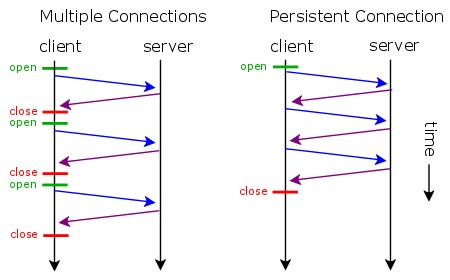
HPACK compression addresses HTTP header metadata overhead that grew problematic as websites became more complicated. The single connection approach reduces reminiscence and processing footprint in comparability with HTTP/1.1’s a number of TCP connections. This innovation solves head-of-line blocking, where sluggish useful resource requests delay all of the assets in the queue.
Tan et al. (Tan et al., 2020) discuss how QUIC makes use of connection migration to uniquely establish connections, proposing a Proactive Connection Migration (PCM) mechanism to optimize community selection in heterogeneous environments. Efficiency of QUIC Extensive analysis has explored QUIC’s enhancements over traditional protocols, emphasizing its capacity to significantly enhance net shopping experiences. Our outcomes show H3’s capacity to maintain up low request time and guarantee seamless person expertise throughout network transitions, highlighting its suitability for cell and dynamic networking environments.